Colorado Warns of Potential Damage to Christmas Lights from Horned Deer
As the holiday season approaches, residents of Colorado are reminded to take precautions regarding their outdoor Christmas decorations. The Colorado Parks and Wildlife (CPW) has issued a warning about the potential risks posed by horned deer.
Every winter, male deer shed their antlers and are often seen in urban areas, particularly around homes adorned with festive lights. These deer are known for their aggressive behavior during the rutting season, which typically runs from late October to early December. During this time, male deer are more likely to engage in sparring with one another, leading to potential damage to property.
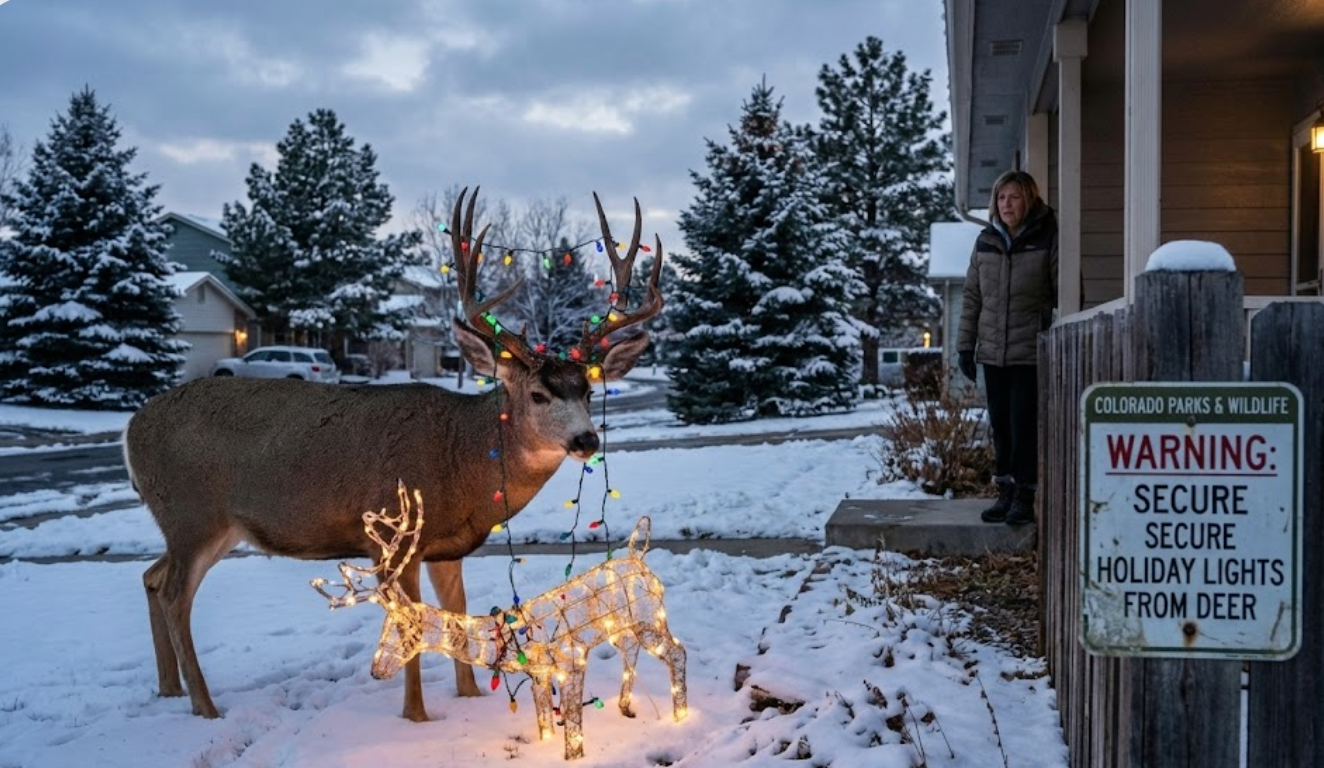
The CPW noted that outdoor Christmas lights and decorations can become targets for these deer, especially if they perceive them as threats or obstacles. The bright colors and flashing lights can attract their attention, prompting them to investigate. This can result in tangled wires, broken ornaments, or even damaged fixtures.
Residents are encouraged to take several precautions to protect their holiday decorations. First, using sturdy, well-secured decorations can help minimize the risk of damage. Homeowners should ensure that lights are properly fastened to prevent them from being easily knocked down by curious deer.
In addition, positioning decorations strategically can also help. It is advisable to keep lights and ornaments away from areas where deer are likely to roam, such as near wooded regions or open fields. Homeowners should consider placing decorations higher off the ground, if feasible, to deter deer from reaching them.
Experts from CPW emphasize the importance of understanding deer behavior during this time of year. Deer are naturally drawn to areas where they feel safe, and suburban environments can provide an appealing refuge, especially during the colder months. As deer become more active in search of food, they may wander closer to human habitats, increasing the likelihood of encounters.
CPW officials also remind residents that deer are generally not aggressive unless threatened. However, the presence of horned males during the rut can lead to more unpredictable behavior. **Keeping a safe distance from deer** is advisable, particularly if they appear to be agitated or if multiple deer are present.
The warning comes as part of a broader initiative by CPW to educate the public about wildlife interactions during the winter months. The agency has emphasized the significance of coexistence with local wildlife and the need to respect their natural behaviors.
In addition to the risks to Christmas decorations, there are other concerns related to deer activity in urban settings. Increased deer presence can lead to traffic hazards, particularly on rural roads where deer crossings are common. Drivers are urged to remain vigilant, especially during dawn and dusk when deer are most active.
Residents are also reminded of the importance of not feeding deer. While it may be tempting to provide food during harsh winter conditions, this can lead to dependency on human sources and alter natural foraging behaviors. Feeding deer can also contribute to overcrowding in suburban areas, increasing the likelihood of property damage and deer-vehicle collisions.
As the holiday season approaches, the CPW encourages Coloradans to enjoy the festivities while remaining mindful of their surroundings. By taking simple precautions, residents can help safeguard their Christmas lights and decorations while coexisting peacefully with local wildlife.
In summary, Colorado residents are advised to secure their outdoor Christmas decorations, remain aware of deer behavior, and avoid feeding wildlife to ensure a safe and festive holiday season. By following these guidelines, homeowners can protect their properties and contribute to a harmonious relationship with the deer that share their environment.
As the community embraces the spirit of the holidays, the CPW’s reminders serve as a timely reminder of the unique interactions between humans and wildlife that characterize life in Colorado.